Quick Summary
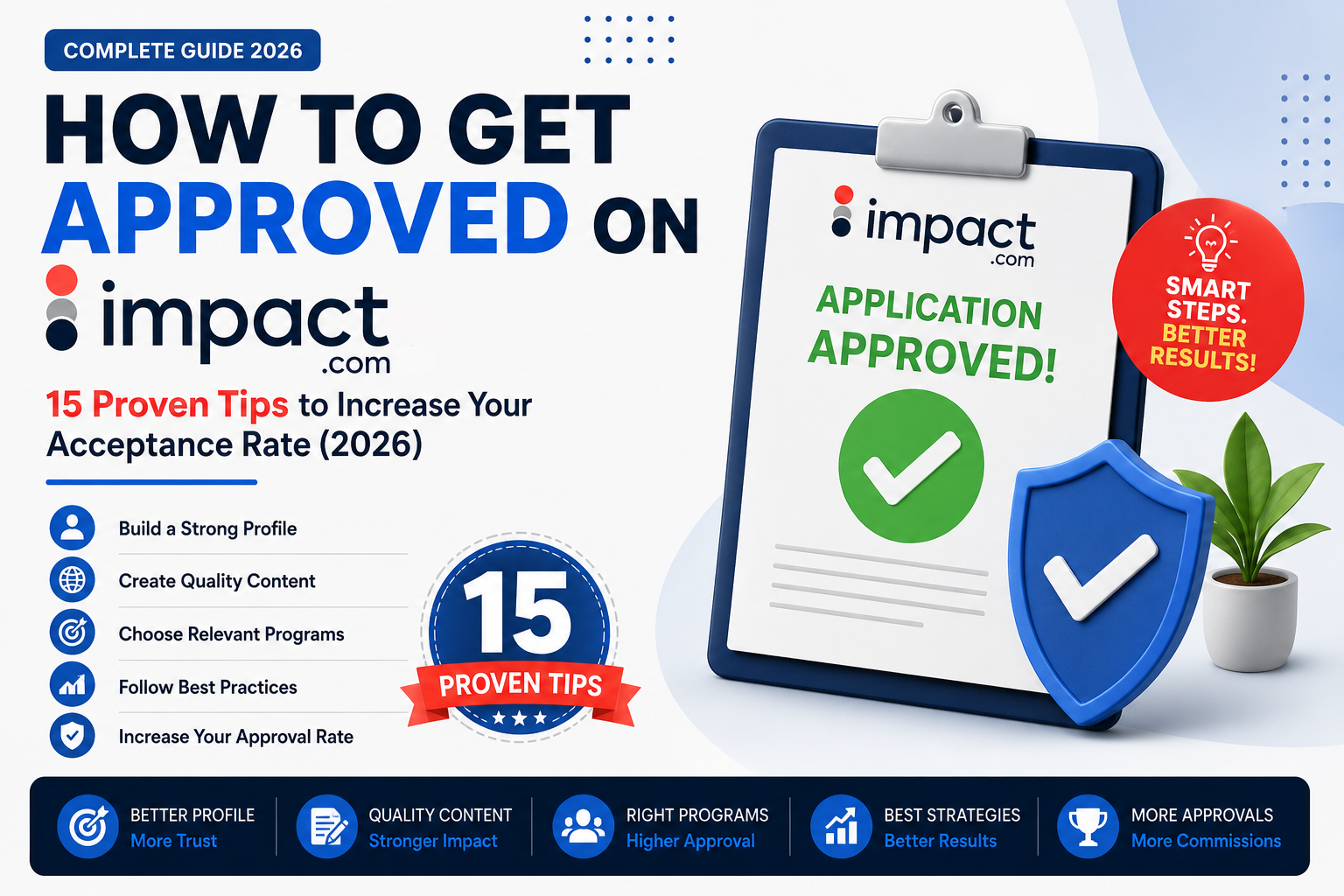
How to Get Approved on Impact.com Getting accepted into affiliate programs on Impact.com isn’t always easy, especially if you’re a beginner. Many publishers apply to dozens of programs but receive rejection emails because their website, profile, or application doesn’t meet the advertiser’s expectations.
The good news is that approval isn’t based on traffic alone. Advertisers also evaluate your content quality, niche relevance, website professionalism, audience, and promotional strategy.
In this guide, you’ll learn 15 proven tips that can significantly improve your approval rate and help you build long-term partnerships with leading brands on Impact.com.
Table of Contents
- Why Do Affiliate Programs Reject Applications?
- Build a Professional Website
- Publish High-Quality Content
- Choose a Clear Niche
- Complete Your Publisher Profile
- Add Essential Website Pages
- Apply Only to Relevant Programs
- Write Better Application Messages
- Show Your Traffic Sources
- Be Honest About Your Promotion Methods
- Improve Your Website Design
- Stay Active and Consistent
- What to Do If You’re Rejected
- Frequently Asked Questions
- Final Thoughts
Why Do Affiliate Programs Reject Applications?
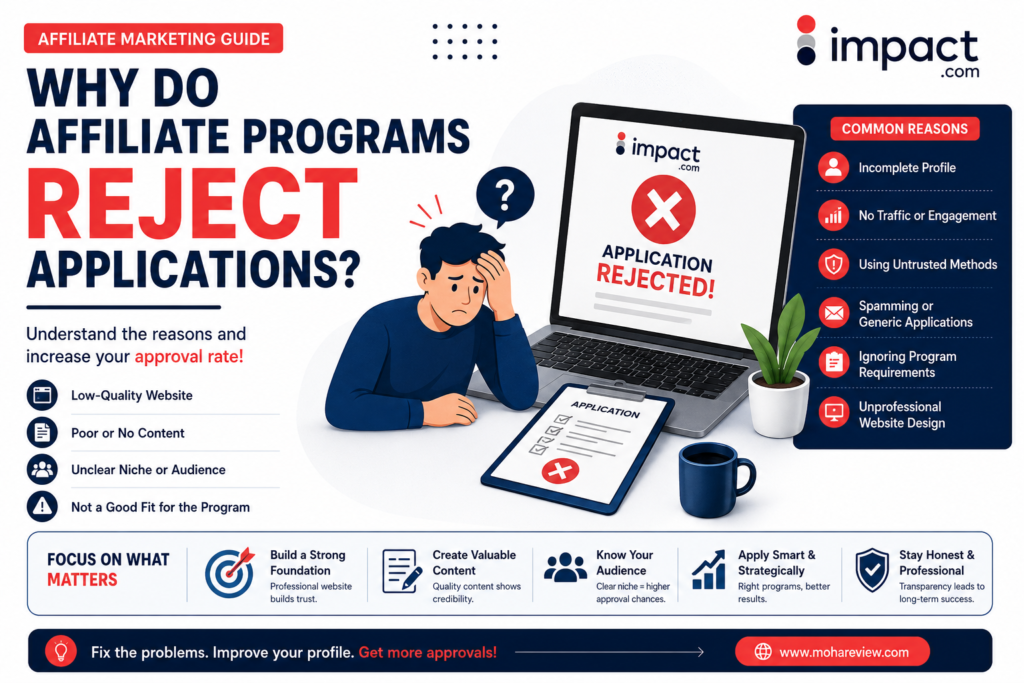
One of the biggest misconceptions in affiliate marketing is that advertisers reject publishers simply because they have low traffic. While traffic matters, it is only one part of the decision-making process.
Affiliate managers want to partner with publishers who can represent their brand professionally. They review your website, content quality, audience, promotional methods, and overall credibility before approving your application.
Some of the most common reasons applications are rejected include:
- Low-quality or incomplete websites.
- Very little original content.
- Unclear website niche.
- Empty publisher profiles.
- Generic application messages.
- Promotional methods that don’t match the advertiser’s goals.
- Websites that appear inactive or outdated.
Understanding these reasons is the first step toward improving your approval rate.
1. Build a Professional Website
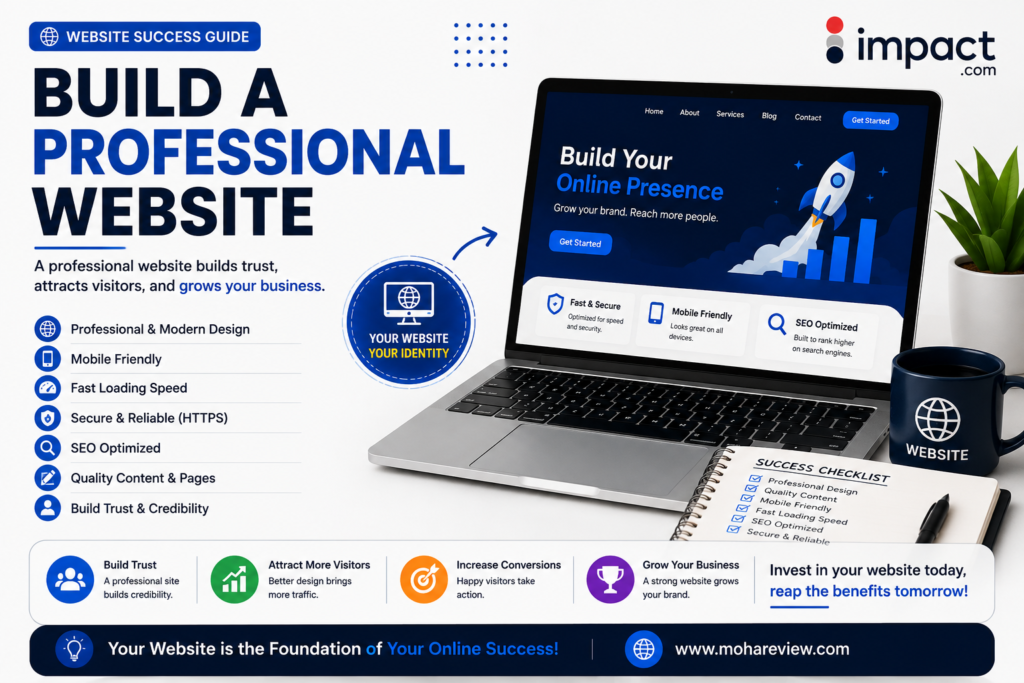
Your website is often the first thing an affiliate manager reviews. A clean, professional design immediately creates trust and shows that you’re serious about affiliate marketing.
Your website should include:
- A fast-loading design.
- Mobile-friendly pages.
- Easy navigation.
- Professional branding.
- Secure HTTPS connection.
- Clear categories.
- Original content.
Even a new website can be approved if it looks trustworthy and provides value to visitors.
2. Publish High-Quality Content
Quality content is one of the strongest signals that you’re a serious publisher.
Instead of publishing short articles filled with affiliate links, focus on creating helpful content that answers real questions and solves real problems.
Examples include:
- Beginner guides
- Product reviews
- Comparison articles
- Tutorials
- Best tools lists
- Industry news
- Case studies
Long-form, informative articles usually perform better in search engines and inspire greater confidence among affiliate managers.
3. Choose a Clear Niche
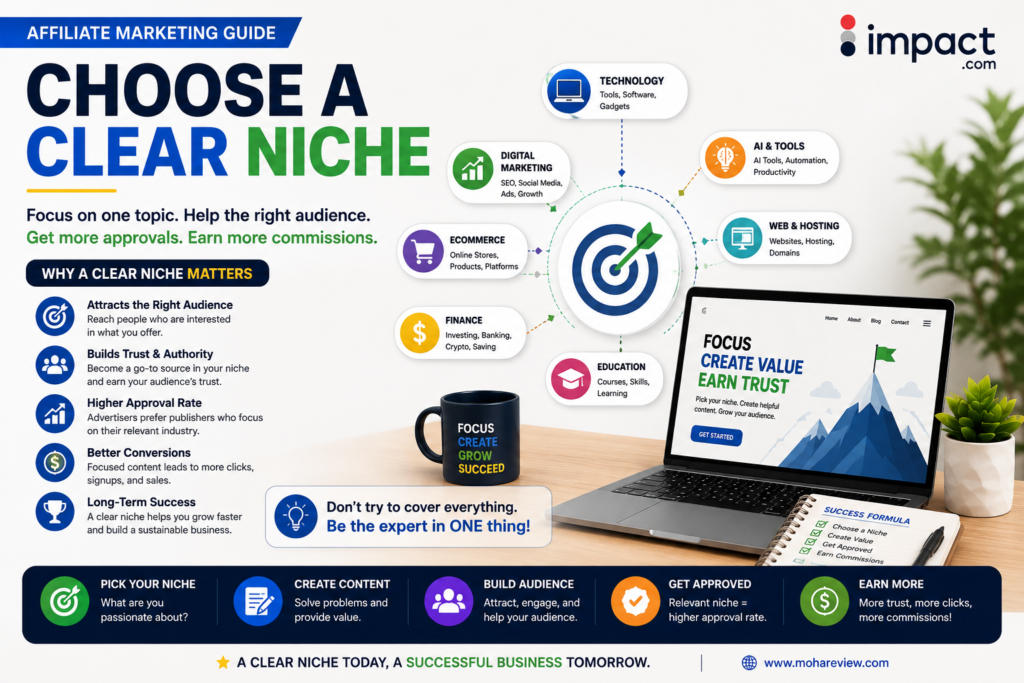
Many beginners make the mistake of writing about everything.
A website that covers one clear topic is much easier for advertisers to understand and trust.
For example, if your website focuses on:
- Affiliate Marketing
- AI Tools
- Web Hosting
- Website Builders
- SEO
- Digital Marketing
then apply for programs related to those topics instead of unrelated industries.
A focused niche often leads to higher approval rates and better conversions.
4. Complete Your Publisher Profile
Your publisher profile is one of the first things advertisers review before approving your application. A complete and professional profile builds trust and demonstrates that you’re serious about affiliate marketing.
Make sure your profile includes:
- Your real name or business name.
- A professional website.
- A clear business description.
- Your primary traffic sources.
- Your target audience.
- Accurate payment information.
- A professional logo or profile picture if available.
An incomplete profile can reduce your chances of approval, even if your website is well-designed.
5. Add Essential Website Pages
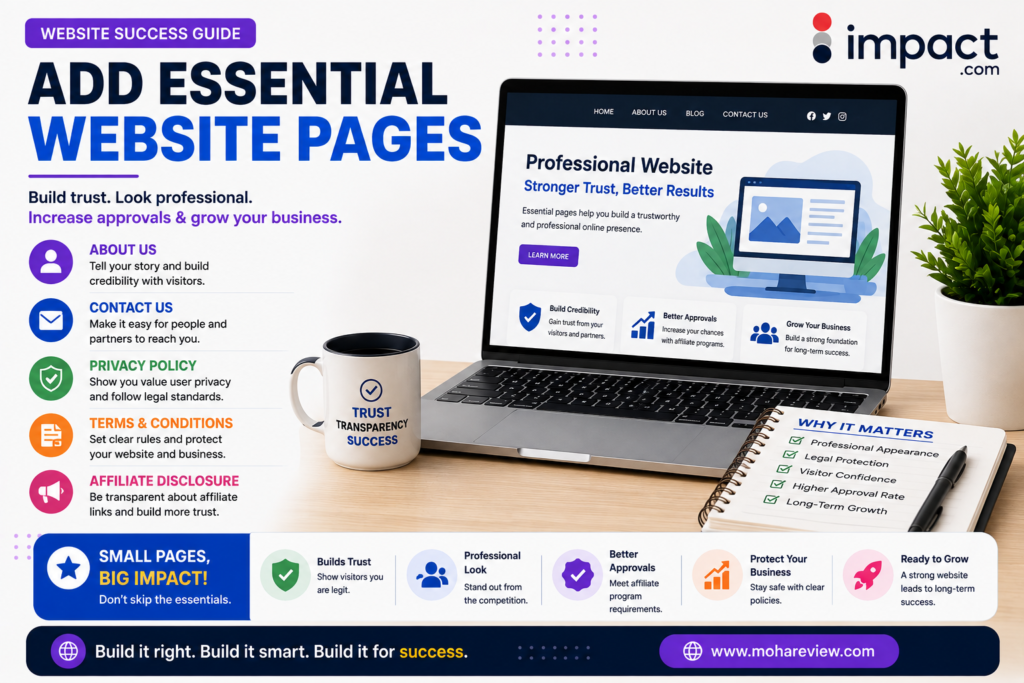
Professional websites include important pages that help establish credibility.
Before applying to affiliate programs, ensure your website has:
- About Us
- Contact Us
- Privacy Policy
- Terms and Conditions
- Affiliate Disclosure
These pages show advertisers that your website is legitimate and follows industry best practices.
6. Apply Only to Relevant Programs
Don’t apply to every affiliate program you see.
Instead, ask yourself:
- Does this product match my audience?
- Can I create valuable content about it?
- Would my readers actually benefit from it?
For example:
A website about AI tools should apply to AI software and SaaS programs rather than unrelated products such as fashion or home décor.
Relevant applications are far more likely to be approved.
7. Write Better Application Messages
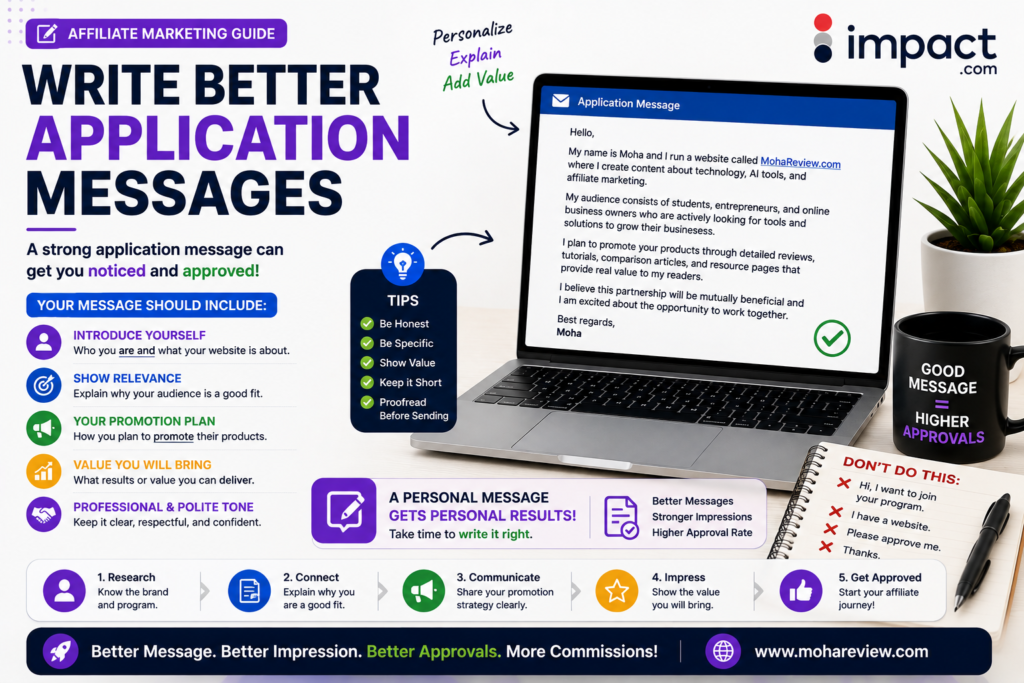
Many beginners submit empty or generic applications.
Instead, write a short, personalized message explaining:
- Who you are.
- What your website focuses on.
- How you plan to promote the advertiser.
- Why the partnership is a good fit.
Professional applications leave a much stronger impression than copy-and-paste messages.
8. Show Your Traffic Sources
Advertisers like to understand where your visitors come from.
Examples include:
- Google Search
- YouTube
- Email newsletters
- X (Twitter)
Even if your traffic is still growing, clearly explaining your marketing strategy demonstrates long-term potential.
9. Be Honest About Your Promotion Methods
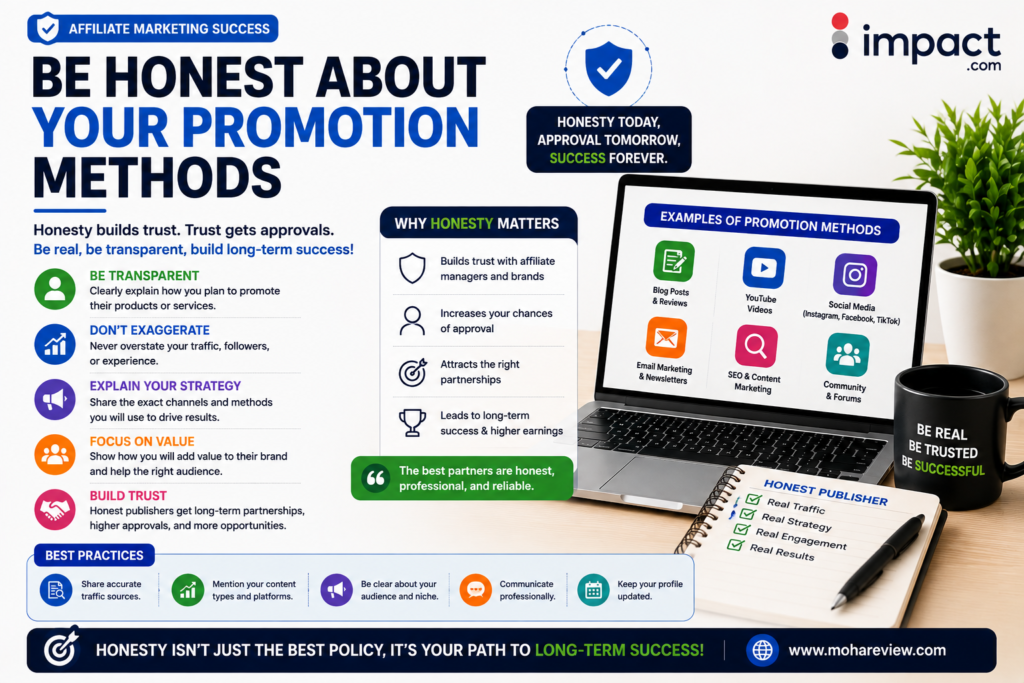
Never exaggerate your traffic, followers, or experience.
Affiliate managers appreciate transparency. Being honest builds trust and can lead to long-term partnerships.
Explain exactly how you plan to promote their products through:
- Blog articles
- Product reviews
- Tutorials
- Social media
- Email marketing
- SEO content
10. Improve Your Website Design
A modern website creates a positive first impression.
Consider improving:
- Website speed
- Mobile responsiveness
- Typography
- Navigation
- Images
- Branding consistency
Visitors and affiliate managers are both more likely to trust a professional-looking website.
11. Stay Active and Consistent
Inactive websites rarely attract premium affiliate partnerships.
Continue publishing fresh content regularly.
A consistent publishing schedule shows advertisers that your website is growing and actively maintained.
12. What to Do If You’re Rejected
Receiving a rejection doesn’t mean you can never work with that advertiser.
Instead:
- Improve your website.
- Publish more content.
- Strengthen your profile.
- Increase your traffic.
- Wait several weeks before reapplying.
- Apply to other relevant affiliate programs in the meantime.
Many successful affiliate marketers were rejected before eventually being accepted.
15 Proven Tips to Increase Your Acceptance Rate
- Build a professional website.
- Publish high-quality content.
- Focus on one niche.
- Complete your publisher profile.
- Add important legal pages.
- Apply only to relevant programs.
- Personalize every application.
- Explain your promotion strategy.
- Keep your website updated.
- Improve website speed.
- Make your site mobile-friendly.
- Use professional branding.
- Be honest about your traffic.
- Continue creating valuable content.
- Stay patient and keep improving.
Frequently Asked Questions
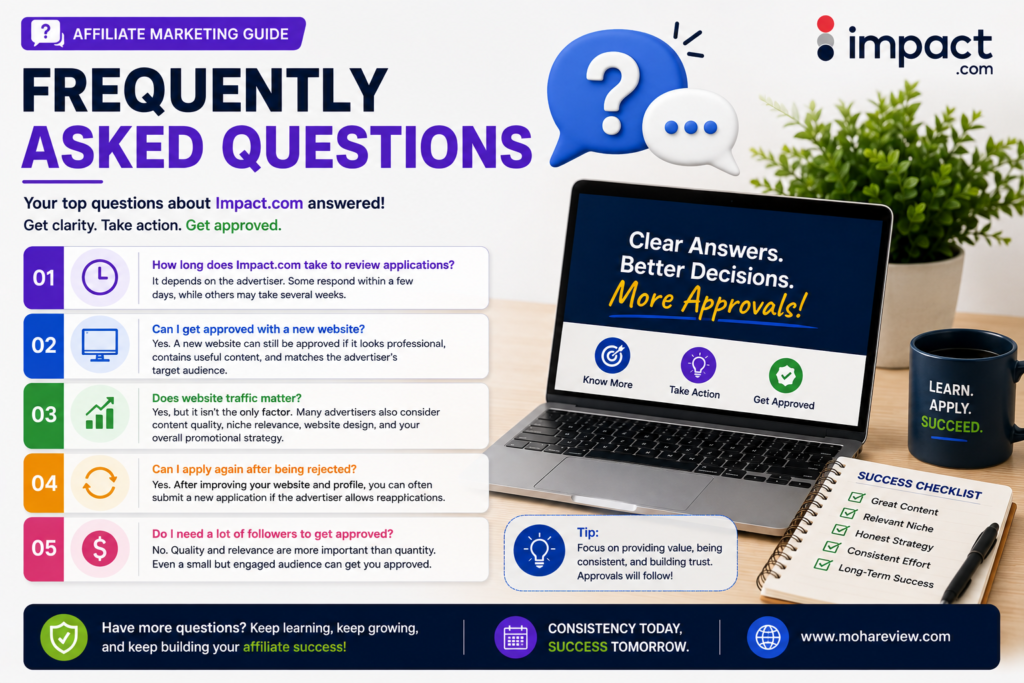
How long does Impact.com take to review applications?
It depends on the advertiser. Some respond within a few days, while others may take several weeks.
Can I get approved with a new website?
Yes. A new website can still be approved if it looks professional, contains useful content, and matches the advertiser’s target audience.
Does website traffic matter?
Yes, but it isn’t the only factor. Many advertisers also consider content quality, niche relevance, website design, and your overall promotional strategy.
Can I apply again after being rejected?
Yes. After improving your website and profile, you can often submit a new application if the advertiser allows reapplications.
Final Thoughts
How to Get Approved on Impact.com Getting approved on Impact.com is about much more than having a large audience. Advertisers want partners who create valuable content, understand their audience, and represent their brand professionally.
Instead of applying to dozens of programs immediately, focus on improving your website, publishing consistent content, and building a trustworthy publisher profile. These steps will not only increase your approval rate but also help you build lasting relationships with top affiliate programs.
With patience, consistency, and continuous improvement, you’ll be in a much stronger position to secure approvals and earn affiliate commissions through Impact.com.