Can I Learn Digital Marketing Myself?
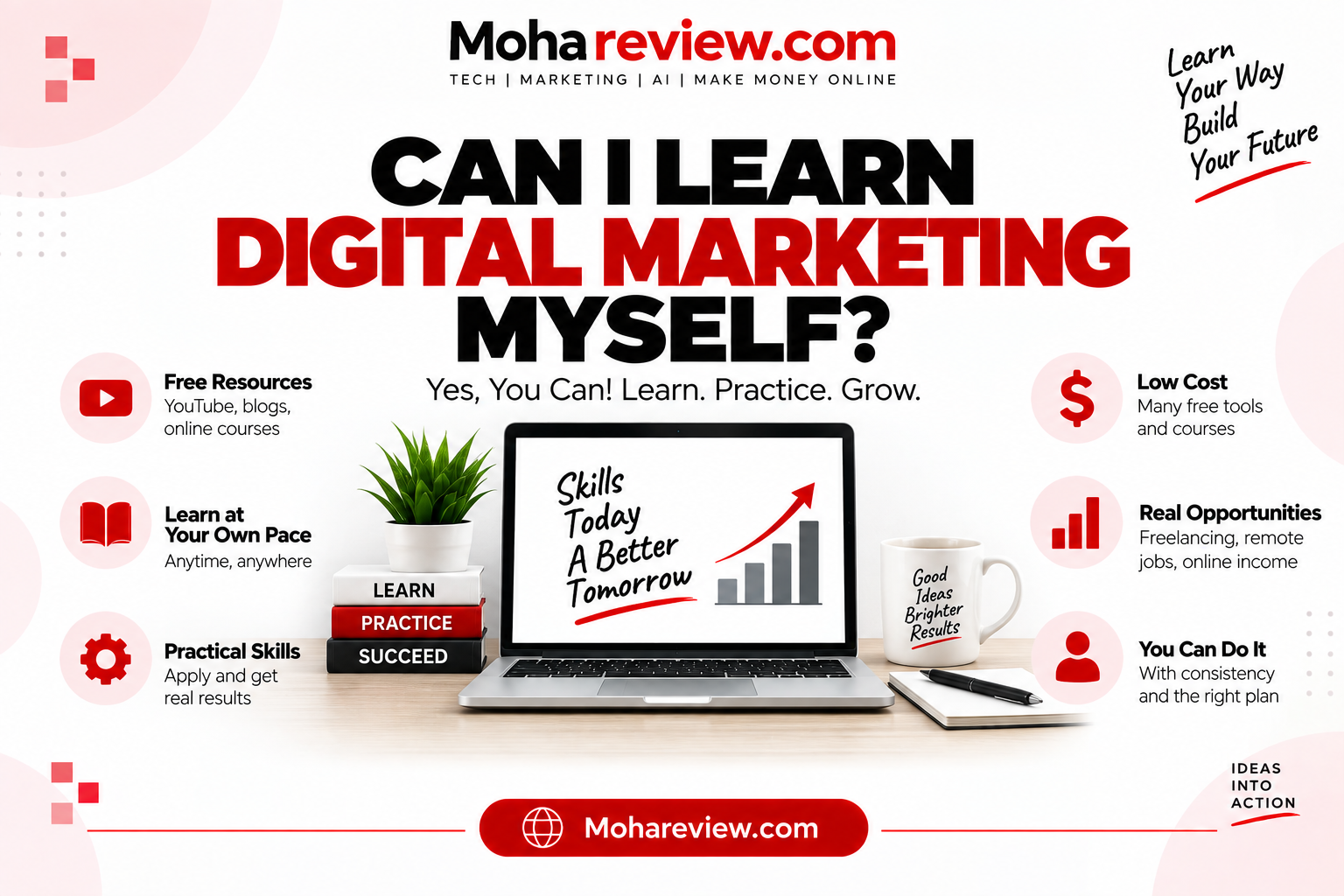
Yes, you can learn digital marketing yourself.
You don’t necessarily need a university degree, expensive course, or large budget to begin. Many of the fundamental skills can be learned through free educational resources, practical projects, experimentation, and consistent practice.
However, learning digital marketing yourself doesn’t mean simply watching videos or reading articles.
The most effective approach is:
Learn → Practice → Test → Measure → Improve
Digital marketing covers many areas, including:
- Search Engine Optimization (SEO)
- Social Media Marketing
- Content Marketing
- Email Marketing
- Affiliate Marketing
- Search Advertising
- PPC
- Video Marketing
- Influencer Marketing
- Analytics
You don’t need to master everything at once.
Instead, choose one area, build your knowledge, practice it on a real project, and gradually expand your skills.
Why Can You Learn Digital Marketing Yourself?
can I learn digital marketing myselfDigital marketing is particularly suitable for self-learning because many of the tools and platforms are publicly available.
You can learn by:
- Reading educational articles
- Watching tutorials
- Following industry resources
- Practicing SEO
- Creating social media content
- Building a website
- Running small marketing experiments
- Studying analytics
- Analyzing successful campaigns
For example, instead of only learning what SEO means, you could create a website and actually optimize an article.
That practical experience can help you understand how the concepts work.
What Do You Need to Start Learning?
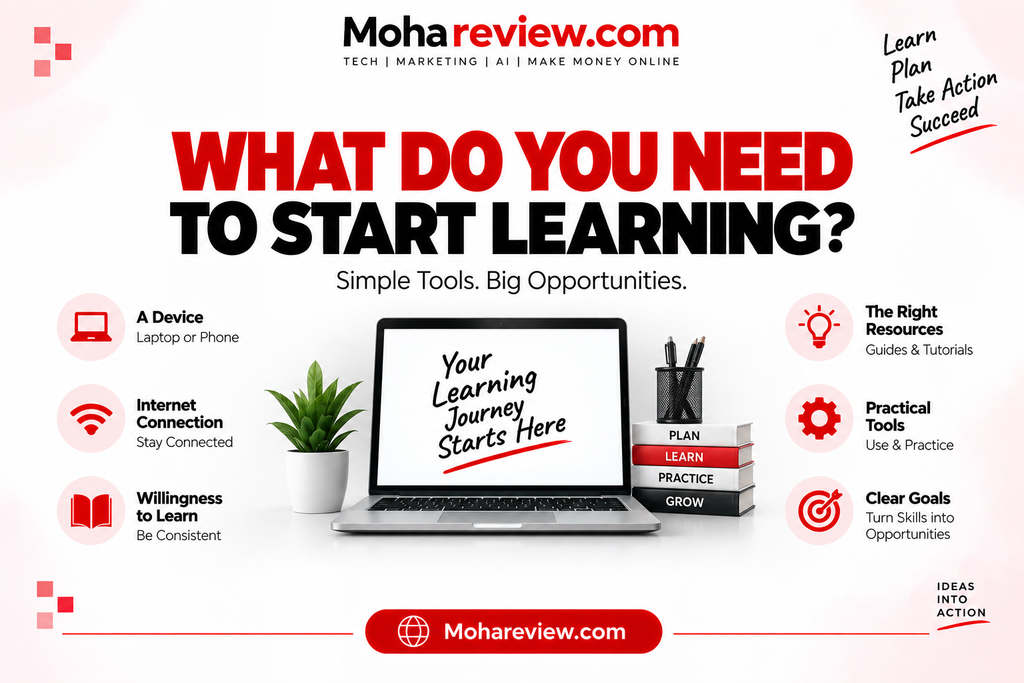
You don’t need expensive equipment. can I learn digital marketing myself
A beginner can start with:
1. A Computer or Smartphone
A computer is particularly useful for website management, SEO, analytics, advertising platforms, and content creation.
2. Internet Access
You’ll need internet access to study, research, publish content, and use digital marketing platforms.
3. Time
Consistency is more important than studying for one day and stopping.
Even 1–2 hours per day can give you meaningful practice if you use the time effectively.
4. A Place to Practice
This could be:
- Your own website
- A blog
- A social media account
- A YouTube channel
- A small business project
- An affiliate marketing project
Having something real to work on can make learning much easier.
The Best Way to Learn Digital Marketing Yourself
A simple learning process is:
Step 1 → Learn the basics
Step 2 → Choose one specialization
Step 3 → Build a real project
Step 4 → Practice consistently
Step 5 → Measure results
Step 6 → Identify mistakes
Step 7 → Improve
Step 8 → Learn another marketing channel
This is more practical than trying to learn every digital marketing topic simultaneously.
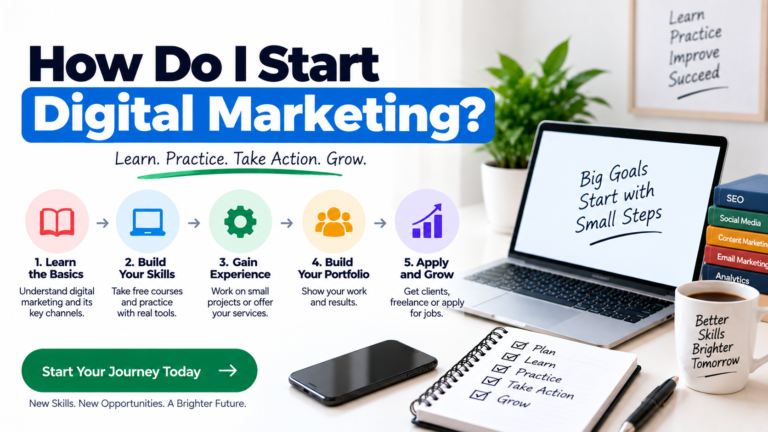
1. Learn the Fundamentals First
Before focusing on advanced strategies, can I learn digital marketing myself understand what digital marketing actually involves.
Learn basic concepts such as:
- Target audience
- Customer journey
- Marketing funnel
- Branding
- Content
- Traffic
- Leads
- Conversions
- Click-through rate
- Engagement
- Return on investment
For example:
Traffic means people visiting a website or digital platform.
Lead generally refers to a person who has taken an action that indicates potential interest.
Conversion refers to a desired action, such as a purchase, signup, or lead submission.
Understanding these concepts will make the rest of digital marketing easier to learn.
2. Start With SEO
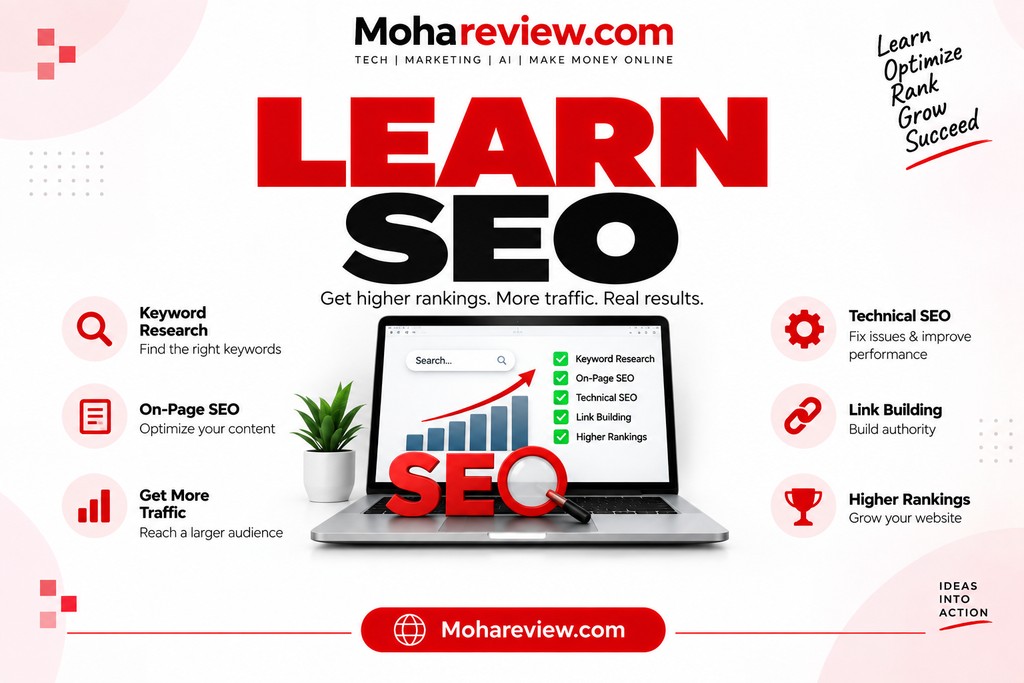
SEO is a useful skill for beginners because you can practice it without needing a large advertising budget.
Start by learning:
- Keyword research
- Search intent
- On-page SEO
- Title optimization
- Meta descriptions
- Heading structure
- Internal linking
- Image optimization
- Technical SEO
- Search performance
Then practice by creating an article.
For example:
Keyword → Article → Optimization → Search visibility → Traffic
Don’t expect every article to rank immediately.
SEO is generally a long-term process, and results can vary depending on competition, content quality, website authority, and many other factors.
3. Learn Social Media Marketing

Social media is another practical area for self-learning.
Choose one or two platforms rather than trying to master every platform immediately.
You can learn:
- Content creation
- Captions
- Hashtags and keywords
- Audience research
- Short-form video
- Community engagement
- Social analytics
- Organic traffic
- Paid advertising
For example, you could create a social media page around a specific topic and publish useful content consistently.
Then monitor:
- Views
- Reach
- Engagement
- Clicks
- Followers
- Website traffic
This gives you real data to learn from.
4. Learn Content Marketing
Content is a major part of digital marketing.
You can practice content marketing by creating:
- Blog posts
- Tutorials
- Videos
- Guides
- Infographics
- Social media posts
- Reviews
- Educational resources
The goal isn’t simply to publish as much content as possible.
The goal is to create content that is useful to a specific audience.
For example, instead of writing a general article about smartphones, you could create:
“How to Choose a Smartphone for Students”
This targets a clearer audience and problem.
5. Learn Affiliate Marketing

Affiliate marketing is another area you can learn independently.
The basic model is:
Audience → Affiliate Link → Qualifying Action → Commission
You can learn about:
- Affiliate networks
- Affiliate programs
- Tracking links
- Cookies
- Commissions
- Leads
- Conversions
- Content promotion
- Disclosure requirements
You can then practice by creating useful product reviews, comparisons, tutorials, or educational content.
6. Learn Email Marketing
Email marketing is another valuable skill. can I learn digital marketing myself
Start by understanding:
- Email lists
- Signup forms
- Newsletters
- Email sequences
- Subject lines
- Click-through rates
- Open rates
- Conversions
You can create a small email list and experiment with different types of useful content.
The objective shouldn’t be to send as many emails as possible.
Instead, focus on providing information that subscribers actually find useful.
7. Learn Paid Advertising Later

You can learn paid advertising yourself, but it is usually better to understand basic marketing concepts before spending significant money.
Learn:
- Audience targeting
- Ad copy
- Creative design
- Landing pages
- Campaign objectives
- Budgeting
- Click-through rates
- Conversion rates
- Cost per lead
- Return on ad spend
You can study advertising platforms first without immediately spending large amounts of money.
When you’re ready, start with a small controlled test.
8. Learn Analytics
Learning analytics is extremely important.
Digital marketing isn’t only about creating content.
You also need to understand what happens after you publish it.
Learn how to measure:
- Traffic
- Impressions
- Clicks
- Engagement
- Leads
- Conversions
- Conversion rate
- Cost per acquisition
For example:
If 1,000 people visit your website and 20 people complete your desired action, your conversion rate is:
20 ÷ 1,000 × 100 = 2%
Understanding numbers helps you make better marketing decisions.
9. Build Your Own Website
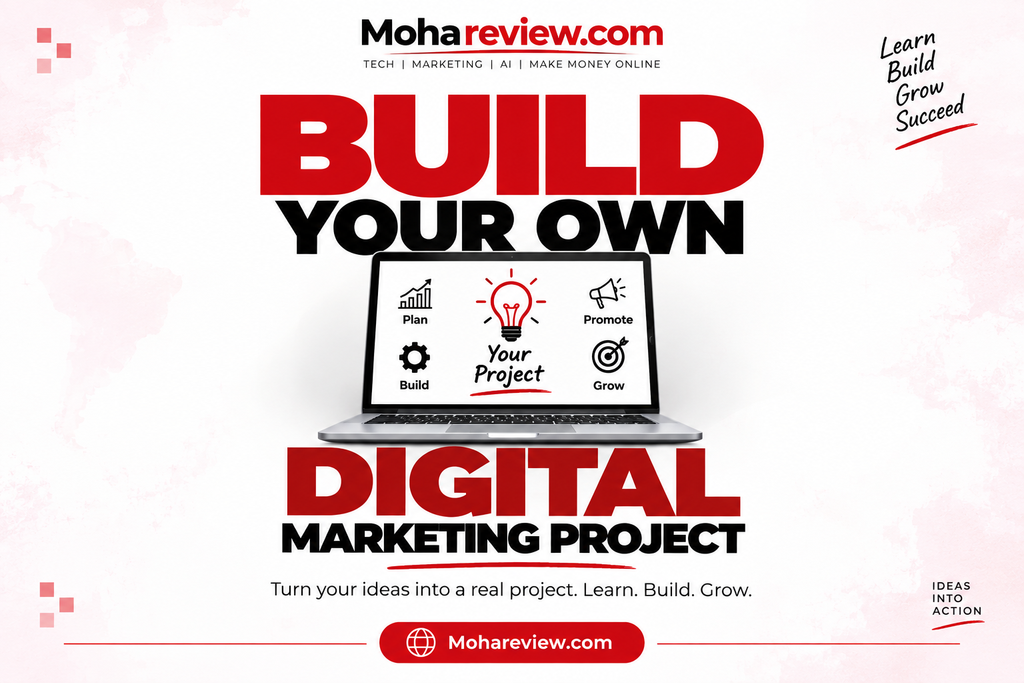
One of the best ways to learn digital marketing is to build something yourself.
A website gives you opportunities to practice:
- SEO
- Content marketing
- Website optimization
- Analytics
- Internal linking
- Email marketing
- Affiliate marketing
- Conversion optimization
Instead of only learning theoretical information, you’ll encounter real problems and have to solve them.
That practical experience can become extremely valuable.
10. Create Your Own Digital Marketing Project
You don’t need a large company to practice.
Your project could be:
A Blog
Write articles around one topic.
Affiliate Website
Publish useful reviews and comparisons.
Social Media Page
Build an audience around a specific subject.
YouTube Channel
Create educational or entertainment videos.
Small Business Website
Practice marketing for your own business or a project.
The important thing is to choose something that gives you opportunities to practice repeatedly.
11. Follow a Simple 90-Day Learning Plan
A structured plan can make self-learning easier.
Month 1: Fundamentals
Learn:
- Digital marketing basics
- SEO
- Content marketing
- Social media
- Analytics
Practice:
- Keyword research
- Writing articles
- Creating social media posts
- Reading analytics
Month 2: Specialization
Choose one or two areas.
For example:
SEO + Content Marketing
or
Social Media + Video Marketing
or
Affiliate Marketing + SEO
Go deeper instead of trying to learn everything.
Month 3: Testing and Improvement
Start measuring actual results.
Look at:
- Website traffic
- Search impressions
- Clicks
- Social engagement
- Leads
- Conversions
Then ask:
What worked?
What didn’t work?
What can I improve?
This is where digital marketing starts becoming practical rather than purely theoretical.
12. Don’t Try to Learn Everything at Once
One of the biggest mistakes beginners make is trying to master:
SEO + PPC + Email + Social Media + Affiliate Marketing + Video + Analytics
all at the same time.
This can become overwhelming.
A better approach is:
Learn one → Practice it → Understand it → Measure it → Move to the next.
For example:
Stage 1
SEO
Stage 2
Content Marketing
Stage 3
Social Media
Stage 4
Analytics
Stage 5
Email or Affiliate Marketing
Stage 6
Paid Advertising
This creates a stronger foundation.
13. Can You Learn Digital Marketing Without Paying for a Course?
Yes.
Paid courses can be useful, but they are not the only way to learn.
You can learn from:
- Search engines
- Blogs
- Official platform documentation
- Online videos
- Free tutorials
- Case studies
- Marketing communities
- Practical projects
The important thing is to evaluate the quality and freshness of what you’re learning.
Digital marketing changes frequently, so information from several years ago may no longer accurately describe current platforms or best practices.
14. How Long Does It Take to Learn Digital Marketing?
There is no single timeline.
You can understand basic concepts within weeks, but becoming highly skilled can take much longer.
A rough learning path could look like:
1 Month: Basic concepts
3 Months: Practical beginner skills
6 Months: More confident execution
1 Year+: Deeper experience and specialization
These are not fixed milestones.
Your progress depends on:
- Time spent learning
- Quality of resources
- Amount of practice
- Type of marketing
- Feedback
- Real-world experience
15. How Can You Practice Without Clients?
You don’t need clients to start practicing.
You can create your own projects.
For example:
SEO Practice
Create a website and publish optimized articles.
Social Media Practice
Build a page and publish content consistently.
Advertising Practice
Create sample campaigns without necessarily spending money.
Content Practice
Write articles and create videos.
Analytics Practice
Track your own website or social media data.
This gives you examples of your work that can eventually become part of a portfolio.
16. How Do You Know If You’re Improving?
Don’t measure progress only by how many courses you’ve completed.
Look at what you can actually do.
For example, can you:
- Research keywords?
- Write an SEO-friendly article?
- Optimize a webpage?
- Create social media content?
- Analyze traffic?
- Build an email campaign?
- Create an affiliate strategy?
- Read campaign data?
- Identify why a campaign performed poorly?
If you can perform these tasks independently, you’re developing practical skills.
Common Mistakes When Learning Digital Marketing
1. Watching Without Practicing
Watching 100 tutorials doesn’t replace actually doing the work.
2. Changing Topics Too Often
Jumping from SEO to PPC to affiliate marketing every day can slow your progress.
3. Expecting Fast Results
Digital marketing often requires testing and patience.
4. Copying Other Marketers
Study successful strategies, but don’t assume someone else’s results will automatically happen for you.
5. Ignoring Analytics
Without data, you may not know what is working.
6. Buying Too Many Tools
Start with the tools you actually need.
7. Giving Up Too Early
Some strategies, particularly SEO and organic content, can take time to develop.
Do You Need a Degree to Learn Digital Marketing?
No specific degree is required simply to learn digital marketing.
A degree can be useful for certain career paths, but practical digital marketing skills can also be developed independently.
Employers and clients may care about your:
- Skills
- Experience
- Portfolio
- Results
- Communication
- Understanding of marketing
A person who can demonstrate useful practical skills can build credibility through actual work.
Can Self-Taught Digital Marketers Get Clients?
Yes.
Once you’ve developed useful skills, you can potentially offer services such as:
- SEO
- Social media management
- Content creation
- Website marketing
- Email marketing
- Digital advertising
- Affiliate marketing consulting
Start by building your own portfolio.
For example, your website can demonstrate your ability to create content, optimize pages, and attract visitors.
Your social media accounts can demonstrate your content and audience-building skills.
Frequently Asked Questions
Can I learn digital marketing myself?
Yes. You can learn digital marketing through online resources, practical projects, experimentation, and consistent practice.
How long does it take to learn digital marketing by yourself?
You can learn the basics within a few weeks, but developing strong practical skills generally requires months of consistent practice.
Can I learn digital marketing without a degree?
Yes. A degree is not required to learn digital marketing. Practical skills, experience, and a portfolio can also demonstrate your abilities.
Can I learn digital marketing for free?
Yes. Many educational resources and basic tools are available for free, although some advanced tools, courses, and advertising platforms cost money.
What should I learn first?
Start with the fundamentals, then choose one area such as SEO, content marketing, social media marketing, or affiliate marketing.
Is digital marketing difficult to learn?
The basics are accessible, but becoming highly skilled requires continuous learning because platforms, technologies, and consumer behavior change over time.
Can I get a digital marketing job after learning by myself?
Yes, self-taught skills can be used to build a portfolio and apply for relevant opportunities. Requirements vary by employer and position.
Final Thoughts
Yes, you can learn digital marketing yourself.
You don’t need to know everything from the beginning.
Start with the fundamentals, choose one area, build a real project, and practice consistently.
A simple path is:
Learn → Practice → Measure → Improve → Repeat
If you have a website, social media account, blog, or affiliate project, you already have something you can use as a practical learning environment.
The goal isn’t to become an expert overnight.
The goal is to develop one useful skill at a time and turn what you learn into practical experience.
- How to Make Money Online for Beginners
- Affiliate Marketing for Beginners: The Complete 2026 Guide
- Best Affiliate Programs for Beginners in 2026
- How to Choose the Right Affiliate Program
- How to Earn Your First Commission on Impact.com
- How to Get Approved on Impact.com
- Impact.com vs PartnerStack: Which Affiliate Network Is Better for Beginners in 2026?
- PartnerStack Affiliate Marketing: The Complete Beginner’s Guide to Earning Your First Commission